
TL;DR

Get workout gear delivered free with Prime
- Fast, free delivery on millions of items
- Prime Video, Amazon Music and more included
- Member-only deals all year
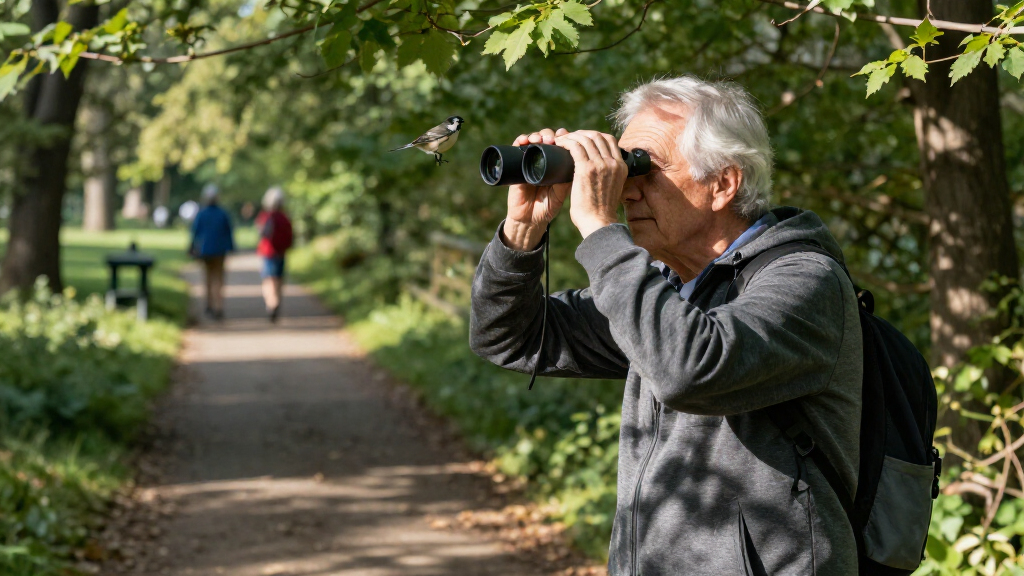
A BBC report describes research linking expert birdwatchers with differences in brain activity and organisation in regions involved in attention and visual recognition. The report says the findings may indicate preservation and could help slow ageing, while further research is needed to understand their wider significance. Separate care-home research reported improvements in residents’ wellbeing and cognitive agility after bird-feeding stations were installed.
Brain scans of expert birdwatchers showed differences in activity and organisation in regions involved in attention and visual recognition, according to research featured in a BBC report. The report says these findings may indicate a kind of preservation and might help slow ageing, while further research is needed to understand how the findings relate to wider cognitive function. Separate care-home research described possible benefits for residents’ wellbeing and cognitive agility.
Erik Wing, who led the brain-imaging research at Baycrest Academy for Research and Education in Toronto, compared scans of expert birders with scans of novices as participants identified birds. Expert birdwatchers showed more activity in brain regions associated with attention, visual perception and visual recognition, particularly when identifying birds they did not already know.
Wing also found that some of those regions were more organised and coherent in expert birders than in novices of the same age. Brain organisation generally declines with age, and lower measures have been associated with reduced cognition. The report says the findings do not prove whether these structural differences are a cause or an effect of birdwatching expertise. It also says more research is needed to understand how this kind of preservation relates to wider cognitive function.
The report also describes research in nursing homes led by Elisabeth Kals, a professor of social and organisational psychology at the Catholic University of Eichstätt-Ingolstadt. Her team installed bird-feeding stations outside 65 homes, positioned so residents could watch from an indoor common area. After a few weeks, the team reported improvements in assessments of cognition and wellbeing. Mobility was also assessed, though the report does not specify whether it improved. The assessments drew on self-reports and information from staff and relatives.
Brain Findings and Care-Home Benefits
The research points to possible reasons birdwatching could matter to older people: bird identification involves attention and visual-processing systems, while the BBC report also mentions feelings of calm and connection to others associated with birdwatching. In the care-home project, residents could watch birds from an indoor common area. Separately, findings from a Polish study suggest psychological restoration may be reported by birdwatchers without special knowledge or skills.
That distinction matters for interpreting the findings. The BBC report says the brain differences may indicate a kind of preservation and might help slow ageing, but further research is needed to understand their wider cognitive significance. The care-home project reported improvements in assessments of cognition and wellbeing; the report does not describe it as a treatment for dementia. Kals described birdwatching as “extremely accessible.”
Products Worth Considering

LEVOIT Vital 200S-P Smart Air Purifier for Large Rooms

Oral-B iO Series 5 Rechargeable Electric Toothbrush with Travel Case and 3 Brush Heads, Black

Theragun Mini 3rd Generation Massage Gun – Travel Essential (Black)
As an affiliate, we earn on qualifying purchases.
Expertise, Interest and Dementia
The BBC report describes birdwatching groups in the UK, Germany and the United States, including a weekly group at Forge Mill Lake in England’s West Midlands. One participant, identified by the pseudonym Harold, has dementia. His daughter brought him to the group, where he gradually engaged with the birds and smiled.
Jenny Budinger, a community dementia adviser at Age UK, which runs the group, said the outing helped Harold be present without worrying about his memory or confidence. The report also cites a Polish study of 388 birdwatchers: participants who described birding as important and were especially interested in it were more likely to report psychological restoration than highly skilled birders who were less enthusiastic.
“A “kind of preservation of organisation””
— Erik Wing, who led the brain-imaging research at Baycrest Academy for Research and Education
What the Studies Cannot Establish
The report says the brain-imaging findings do not prove whether the structural differences are a cause or an effect of birdwatching expertise. It describes them as potentially indicating preservation and says they might help slow ageing, while noting that more research is needed to understand how this relates to wider cognitive function.
The care-home report describes positive changes after bird-feeding stations were installed and says assessments took place after a few weeks. It does not describe whether a control group was used or provide details about the size of the reported changes. The account does not provide further information on the methods or longer-term findings.
Further Research on Long-Term Effects
Further studies would need to track people over time to test whether learning bird identification changes brain organisation and whether any changes correspond to meaningful differences in cognitive function. Research would also need to distinguish the effects of expertise from those of general interest, social contact and time spent outdoors.
For care-home programmes, longer follow-up and clearer comparisons could show whether reported improvements persist and which residents benefit. For now, birdwatching can be described as an engaging activity with potential social and wellbeing benefits, not as a proven way to prevent dementia or slow cognitive decline.
Key Questions
Does this research prove birdwatching slows cognitive decline?
No. The brain-imaging findings show differences between expert birders and novices, but do not prove that birdwatching caused them or slowed decline.
What brain differences did researchers report?
Expert birdwatchers showed more activity in regions involved in attention, visual perception and recognition during bird identification. Some of these regions also showed higher organisation and coherence than in novices of the same age.
Can people with dementia take part?
The BBC report describes a community group attended by people with dementia and a care-home project where residents watched birds from indoors. These accounts suggest the activity can be adapted, but do not establish it as dementia treatment.
What did the nursing-home study report?
Researchers installed bird-feeding stations at 65 homes and reported improvements in measures of cognition, mobility and wellbeing after a few weeks. The report does not provide effect sizes or establish whether the changes lasted.
Source: hn