TL;DR

Get workout gear delivered free — and shop member deals
- Fast, free delivery on millions of items
- Access to Prime Big Deal Days deals on October 6–7
- Prime Video, Amazon Music and more included
Fit&Well reports that its writer recommended his 73-year-old father focus on goblet squats, single-arm rows and overhead presses after he had neglected strength training. The report gives a suggested format of three sets of 8–12 repetitions per exercise, with easier variations; it does not report measured results or establish that the routine is suitable for everyone.
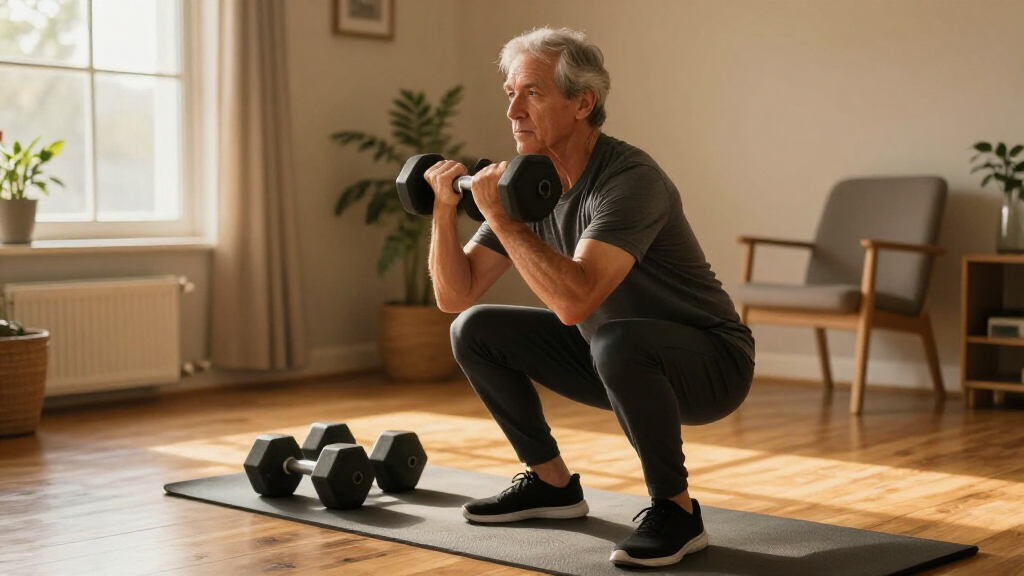
Fit&Well has published a first-person report describing how its writer recommended a three-move dumbbell routine to his 73-year-old father, who had recently spent less time on strength training while caring for his wife, who has Parkinson’s. The suggested exercises are a goblet squat, a single-arm row and an overhead press. The writer links them to everyday actions such as standing up, picking up a bag and reaching overhead.
The writer says he bought his father light-to-medium dumbbells and reviewed basic lifting technique, including keeping a weight close to the chest, engaging the core and staying upright. Before adding the weights, they spent a few weeks practicing bodyweight movements such as squats, hip hinges, lunges and pushes. The article presents the routine as a practical response to his father’s limited time, not as a tested program with published outcomes.
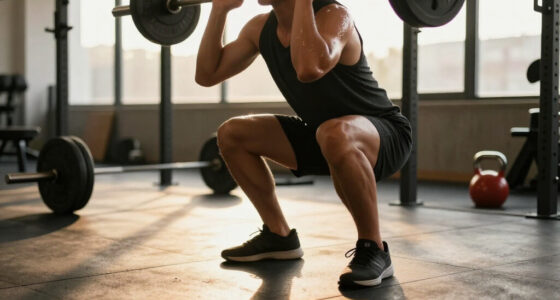
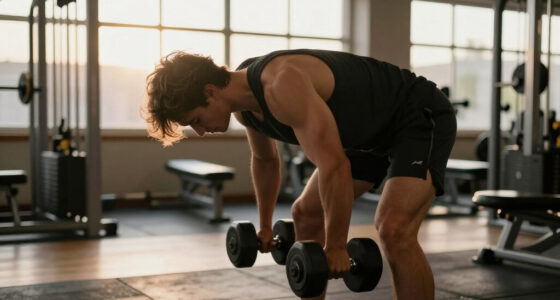
For each exercise, the report suggests three sets of 8–12 repetitions. The goblet squat holds one dumbbell at the chest while the person bends at the hips and knees, then stands. For the single-arm row, one hand is supported on a sturdy surface as the person hinges at the hips and lowers the torso to a 45-degree angle, then pulls the weight toward the ribcage. For the overhead press, dumbbells start at shoulder level and are pressed overhead before being lowered under control.
The account also describes ways to scale the movements. A person can begin with a bodyweight squat or use a chair for sit-to-stands; rows can be done with one knee supported; and an overhead press can be performed seated with back support or one arm at a time. The report suggests increasing difficulty only for someone comfortable with the movement. It does not provide a schedule for how often to train, details of the father’s health or mobility, or a record of his progress.
Strength Moves Tied to Daily Tasks
The routine is framed around actions that can matter in daily life: standing from a chair, picking up a bag and reaching overhead. Those examples help explain why the writer chose movements for the legs, back and shoulders rather than a longer list of isolated exercises. For readers with limited time, the account offers a simple template, alongside easier variations and options to increase difficulty.
The report is a personal account, not evidence that these exercises prevent falls, protect joints or produce particular health outcomes. Its value to readers is chiefly practical: it illustrates how one family approached strength practice for an older adult and why technique and manageable options were part of that approach. Age alone does not establish whether a given load or movement is appropriate for another person.
As an affiliate, we earn on qualifying purchases.
How the Writer Built the Routine
The writer says his father had been active but had recently neglected strength work while caring for his wife. In response, the writer—who says he is a personal trainer—started with equipment and a technique refresher, then used several weeks of bodyweight practice before recommending dumbbells. That sequence is part of the family’s account; the article does not say it is a required progression for all older adults.
The three exercises cover different actions: the squat is described as mimicking standing up, getting off the toilet or bending down; the row involves pulling; and the press involves lifting overhead. In the report, the goblet squat is associated with the legs, glutes and core; the row with the back and shoulders; and the press with the shoulders and core. The article’s everyday examples explain the selection, but it does not publish measurements of strength, mobility or bone health before and after the routine.
““He cares for my mother, who has Parkinson’s, so he ends up with little time for himself.””
— Fit&Well writer, describing his father
light weight dumbbells for strength training
As an affiliate, we earn on qualifying purchases.
As an affiliate, we earn on qualifying purchases.
Results and Individual Suitability
The report does not say how often the father performs the routine, what dumbbell weights he uses, whether he completed the suggested sets and repetitions, or what results he experienced. It also gives no independent assessment of his fitness or medical circumstances. The account cannot establish that the routine caused gains in strength or mobility, or that it would be appropriate for another person.
The source offers easier exercise variations but does not describe an individualized assessment or guidance on whether a particular movement or load is suitable for another person. It does not provide recommendations about consulting a health or exercise professional.
As an affiliate, we earn on qualifying purchases.
How the Routine May Progress
The source does not announce a follow-up, a training schedule or plans to track the father’s progress. It describes easier variations, including a bodyweight squat or seated press, and support options for some exercises. The article says a heavier weight or a push press can make the overhead exercise harder, but it does not set a timetable or prescribe that progression for every reader.
Any further assessment of the routine’s effect would require details the report does not provide, including how consistently the exercises are performed and whether strength or everyday function changes over time. The article is a personal account that includes exercise instructions.
As an affiliate, we earn on qualifying purchases.
Key Questions
What are the three exercises in the routine?
The report lists a dumbbell goblet squat, a single-arm dumbbell row and a dumbbell overhead press.
How many sets and repetitions does the article suggest?
It suggests three sets of 8–12 repetitions for each movement. The report does not specify how many days per week the routine should be done.
What easier versions does the report describe?
It suggests bodyweight squats or chair sit-to-stands, a supported or kneeling row, and a seated or one-arm-at-a-time overhead press. These are options described in the article, not individualized advice.
Does the report show that the routine improved the father’s strength?
No measured results are provided. The article describes the writer’s recommendation and exercise instructions, but does not report before-and-after strength or mobility data.
Should every older adult follow this routine?
The report does not establish that it is suitable for everyone. People with pain, health conditions, balance concerns or uncertainty about lifting should consult a qualified professional before starting or changing a strength routine.
Source: rss
Halloween Picks
halloween
As an affiliate, we earn on qualifying purchases.