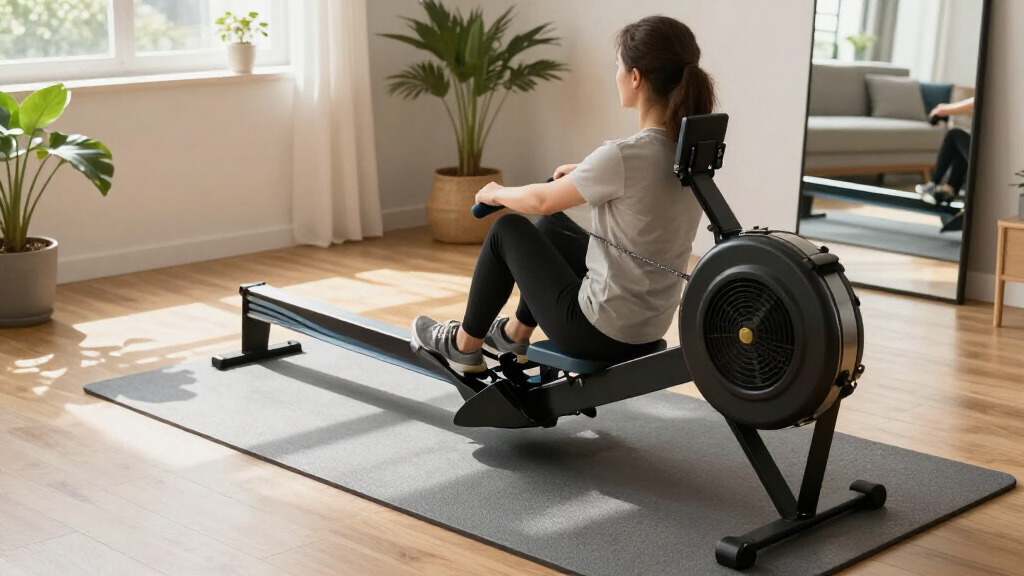
Compact home rowing machines promise a full-body, low-impact workout without permanently claiming a room, but the category splits sharply between foldable magnetic rowers and budget hydraulic models — and that choice drives everything from stroke feel to longevity. My top overall pick is the Merach Q1S, whose dual slide rail and quiet magnetic resistance deliver the smoothest, most apartment-friendly stroke in this lineup. The Merach RS3 stands out for app-connected coaching in a folding frame, while the Sunny Health & Fitness Compact Hydraulic Rower remains the value play if you just want occasional cardio under $200. The main tradeoffs to weigh: magnetic rowers cost more but feel fluid and near-silent, while hydraulic rowers save money and space but feel choppy and wear faster. Keep reading for the full breakdown of all 14 machines.

Get workout gear delivered free — and shop member deals
- Fast, free delivery on millions of items
- Access to Prime Big Deal Days deals on October 6–7
- Prime Video, Amazon Music and more included
Complete the kit

Key Takeaways
- Magnetic resistance dominated the top of this comparison — the Merach Q1S, Merach RS3, and both YOSUDA models all ranked above every hydraulic machine because of smoother stroke feel and quieter operation.
- Foldability claims varied widely: the Merach foldable model and the 350 LB-capacity folding rower genuinely shrink for storage, while several ‘compact’ hydraulic rowers only save space by being small to begin with.
- Hydraulic rowers (GYMAX, Sunny, Feierdun) clustered at the bottom of the rankings — fine for light, occasional use, but their pistons heat up and degrade, making them poor value beyond a $200 budget.
- Duplicate listings in this category are common — the YOSUDA 16-level rower and the Sunny 12-level hydraulic rower each appear twice across retailers, so price-checking both listings can save real money.
- App connectivity separated the modern picks from the dated ones: Merach’s coaching courses add genuine workout structure, while basic LCD monitors on most sub-$250 machines track little more than time and count.


| compact home rowing machine | Resistance Levels | Weight Capacity |
|---|---|---|
| YOSUDA Rowing Machine for Home | 16 (magnetic) | 350 lbs |
| Sunny Health & Fitness Smart F | 12, adjustable | 400 lbs |
| Rowing Machine for Home | 16, up to 99 lbs | 350 lbs |
| Merach RS3 Magnetic Rowing Mac | — | — |
| Rowing Machines for Home Worko | — | 350 lbs |
| YOSUDA Rowing Machine for Home | — | 350 lbs |
| MERACH Foldable Magnetic Rowin | 16 (80 lbs peak) | 350 lbs |
| GYMAX Hydraulic Rowing Machine | — | — |
| Merach Q1S Magnetic Rowing Mac | — | — |
| Sunny Health & Fitness Smart M | 16 magnetic | 300 lbs |
| Sunny Health & Fitness Compact | 12 | — |
| Sunny Health & Fitness Compact | 12 | — |
| Wenoker Magnetic Rowing Machin | 16 | — |
| Feierdun Hydraulic Rowing Mach | 12 | — |
More Details on Our Top Picks
YOSUDA Rowing Machine for Home, Magnetic Rower with 16-Level Resistance
The YOSUDA earns the top spot because it nails the fundamentals that matter most in a compact home rower: quiet magnetic resistance, a stable wider track, and a footprint of roughly 2.9 square feet. Compared with the Sunny Health & Fitness Smart Full Motion Rower, it trades that machine’s 360-degree arm movement for a more traditional fixed-handle pull — less “realistic,” but simpler and better suited to small apartments where quiet operation is non-negotiable. The 16 resistance levels give beginners room to grow, and app connectivity adds guided training without a subscription-style premium price. The tradeoff is the height cap of 5’11”, which rules out taller households, and assembly takes about 25 minutes out of the box.
Pros:- Quiet magnetic resistance with 16 levels — ideal for shared living spaces
- Wider track delivers noticeable stability during hard pulls
- 350 lb weight capacity is generous for this price class
- Smart app connectivity for guided training and progress tracking
Cons:- User height limited to 4’5″–5’11”, excluding taller rowers
- Assembly takes around 25 minutes
- Fixed handlebar design lacks the arm-specific engagement of full-motion rowers
Best for: Apartment dwellers under 5’11” who want a quiet, stable magnetic rower that won’t disturb neighbors
Not ideal for: Taller users over 5’11” and anyone who wants a full-motion rowing simulation with independent arm paths
- Weight Capacity:350 lbs
- Dimensions:59″ L x 19″ W x 25″ H
- Resistance Levels:16 (magnetic)
- Track:Wider track for added stability
- User Height Range:4’5″ – 5’11”
- Footprint:Approx. 2.9 sq ft
- Assembly Time:Approx. 25 minutes
Our verdict“If you’re under six feet tall and want the most balanced mix of quiet performance, stability, and app features in a small footprint, this is the one to buy first.”
Sunny Health & Fitness Smart Full Motion Rower
What sets this Sunny apart from every other pick here is its 400 lb weight capacity combined with 360-degree full motion arms. That independent arm movement engages shoulders and back in a way fixed-handle rowers like the YOSUDA simply can’t replicate, making the stroke feel closer to rowing on water. The elevated, wider padded seat and large anti-slip pedals reinforce the big-and-tall friendliness. The tradeoff is that full-motion arms make the frame less compact than fold-away rivals like the foldable magnetic rower (B0F2M1SH21), and you’ll need a Bluetooth connection to unlock the SunnyFit app features — the on-board monitor alone is fairly basic. Assembly also demands more effort than the largely pre-assembled Merach RS3.
Pros:- 400 lb weight capacity — highest in this lineup
- Full motion arms simulate real on-water rowing and work more muscle groups
- Elevated, wider padded seat is easier on the hips for bigger frames
- Bluetooth connectivity with the SunnyFit app adds guided workouts
Cons:- Full-motion arms add bulk compared with foldable compact rowers
- Best features require a Bluetooth connection and phone
- Assembly takes more effort than pre-assembled competitors
Best for: Larger or taller users who need a 400 lb capacity and want a water-like rowing feel with independent arm movement
Not ideal for: Buyers with very tight storage space or those who want full functionality without relying on a Bluetooth-connected phone
- Weight Capacity:400 lbs
- Resistance Levels:12, adjustable
- Display:Stroke rate, time, count, calories, total strokes
- Connectivity:Bluetooth with SunnyFit App
- Seat:Ergonomic padded, elevated, wider design
- Foot Pedals:Large anti-slip with adjustable straps
- Arm Movement:360-degree full motion
Our verdict“This pick makes the most sense for heavier or broader-framed rowers who prioritize capacity and realistic movement over minimal storage footprint.”
Rowing Machine for Home, 350 LB Capacity, 16-Level Silent Magnetic Resistance, Foldable Design
For buyers whose top priority is reclaiming floor space, this foldable rower is the strongest argument in the batch. Unlike the YOSUDA, which occupies its footprint full-time, this model folds upright and rolls away on transport wheels, and its sub-25dB operation is quiet enough for early-morning sessions in a studio apartment. The 6.5% rail incline adds a light strength element that flat-rail magnetic rowers don’t offer, and resistance tops out at 99 lbs. Compared with the Merach RS3, you give up the richer app ecosystem — this machine’s app support is more basic — and advanced rowers may find the top resistance insufficient for sprint work. Note also that there’s no powered resistance; the workout is entirely manual.
Pros:- Foldable design with transport wheels makes storage genuinely easy
- Under 25dB operation — among the quietest in the lineup
- 6.5% incline rail adds a strength-training element
- 99 lb max resistance across 16 levels suits most intermediate users
Cons:- Resistance ceiling too low for advanced athletes
- No built-in power source — entirely manual operation
- Assembly requires time and effort despite the compact design
Best for: Studio-apartment and small-home users who need to fold and stow the machine between workouts
Not ideal for: Advanced rowers wanting higher ceiling resistance or a deep library of coached workouts
- Weight Capacity:350 lbs
- Resistance Levels:16, up to 99 lbs
- Noise Level:Under 25dB
- Slide Rail Length:46 inches
- Rail Incline:6.5%
- Footprint:2.9 sq ft
- Frame Material:Steel
- Storage:Foldable with transport wheels
Our verdict“If your rower has to disappear into a closet after every session, this foldable model is the pick that best balances storage, quiet, and workout quality.”
Merach RS3 Magnetic Rowing Machine for Home Use
The Merach RS3 stands out for one reason: content. With Bluetooth connectivity to an app offering over 1,000 workouts and games, it turns rowing from a repetitive chore into something closer to structured training — a clear step up from the basic app support on the foldable B0F2M1SH21 rower. It also arrives 85% pre-assembled, so setup takes minutes rather than the half hour the YOSUDA demands. The simulated real-rowing motion and 80 lb max magnetic resistance hold up well for interval training. Tradeoffs: the frame is one of the widest here at 29.5 inches across, the 6’4″ height limit excludes very tall users, and full functionality leans on a Bluetooth connection. If you thrive on guided variety, though, none of the others compete on content depth.
Pros:- App library with 1,000+ workouts and games keeps training varied
- 85% pre-assembled — fastest setup in the roundup
- Realistic rowing simulation with strong full-body engagement
- Stable frame built for intense interval sessions
Cons:- Requires a Bluetooth connection for full functionality
- 29.5-inch width makes it less compact than slimmer rivals
- Height limit of 6’4″ excludes very tall users
Best for: Motivated beginners and intermediate rowers who want guided workouts, games, and variety to stay consistent
Not ideal for: Users who want a fully standalone machine without phone dependency, or rowers over 6’4″
- Resistance:16 levels magnetic, up to 80 lbs
- Max User Weight:350 lbs
- Dimensions:60.6″ L x 29.5″ W x 28.3″ H
- Assembly:85% pre-assembled
- Connectivity:Bluetooth
- Max User Height:6’4″
- Included:Performance monitor, batteries, hardware kit, manual
Our verdict“This model is better suited to anyone who needs coached variety to stay motivated — it’s the content leader, just not the most space-frugal choice.”
Rowing Machines for Home Workout Equipment with LCD Monitor and Accessories
This rower takes a different approach to value: instead of packing in resistance levels or app ecosystems, it ships as a complete starter package — knee pads, workout gloves, a spare pull rope, and a seat cushion come in the box. For a true beginner dipping a toe into rowing, that bundle removes the small friction points that derail new habits. Compared with the Merach RS3, the workout experience is far more basic: a simple LCD monitor replaces a 1,000-workout app library, and there’s no confirmed adjustable resistance — a real limitation once you build fitness. The steel frame and 350 lb capacity are respectable for the price, and the lightweight design stores easily. But the missing published dimensions and vague specs make this a leap of faith for detail-driven buyers.
Pros:- Complete accessory bundle: knee pads, gloves, spare pull rope, seat cushion
- Lightweight, space-saving frame that stores easily
- 350 lb capacity and steel construction punch above the price point
- 1-year warranty included
Cons:- No confirmed adjustable resistance levels — limited room to progress
- Dimensions not published, making fit planning difficult
- Basic LCD monitor with no app compatibility mentioned
Best for: First-time rowers on a tight budget who want everything included — accessories, cushion, and warranty — from day one
Not ideal for: Progress-focused users who need adjustable resistance levels and structured app training
- Weight Capacity:350 lbs
- Max User Height:6’1″
- Display:LCD monitor
- Frame:Heavy-duty steel
- Included Accessories:Knee pads, workout gloves, extra pull rope, seat cushion
- Warranty:1 year
Our verdict“Buy this if you’re brand new to rowing and want the cheapest low-friction entry point; skip it the moment progressive resistance matters to you.”
YOSUDA Rowing Machine for Home, Magnetic Rower with 16-Level Resistance
The YOSUDA H-185 stands out in this lineup for how quietly it operates — under 20 decibels means full-intensity training without disturbing roommates or neighbors. The upgraded heavy flywheel gives strokes a momentum that budget hydraulic models like the GYMAX simply can’t replicate, with no dead zones mid-stroke. A 350-lb weight capacity and 50.2-inch rail keep it stable for taller and heavier users, outmatching the Sunny Health & Fitness Smart Rower’s 300-lb limit. The tradeoff: at 54 pounds and roughly 65 inches long, it’s the heaviest machine here, and while it rolls away, it doesn’t fold — the MERACH foldable model is far easier to stash in a closet. The basic LCD is another compromise versus app-driven competitors.
Pros:- Near-silent magnetic resistance under 20dB
- 350-lb capacity with a stable mono-rail frame
- Long 50.2-inch rail fits users up to 6’3″
- Bluetooth app tracking for progress monitoring
Cons:- Doesn’t fold, so storage still requires floor space
- Basic LCD monitor compared with app-connected rivals
- At 54 lbs it’s heavier to maneuver than folding alternatives
Best for: Apartment dwellers who train early or late and need a near-silent, high-capacity rower
Not ideal for: Anyone with a tiny studio who needs a machine that folds flat — this one only tilts and rolls
- Resistance:16-level magnetic
- Weight Capacity:350 lbs
- Slide Rail:50.2 inches
- Max User Height:6’3″
- Dimensions:64.57″D x 17.72″W x 28.35″H
- Machine Weight:54 lbs
- Noise Level:Under 20 dB
- Warranty:1 year
Our verdict“Buy it if silence and stability matter more than folding flat; skip it if closet storage is your priority.”
MERACH Foldable Magnetic Rowing Machine with 16 Levels, Space-Saving Design, 350 lbs Capacity, App Connectivity, and Coaching Courses
If storage space is the deciding factor, the MERACH foldable rower makes the strongest case here. Its folding frame cuts the footprint by 20% and, at just 38 pounds, it’s dramatically easier to tuck under a bed or slide into a closet than the 54-lb YOSUDA. Where most budget rowers stop at a basic screen, this one adds over 1,000 interactive workouts and coaching courses through its app — real structure for beginners who don’t know how to program their own sessions. The compromises are real, though. The rail caps out at 6’1″ (the Merach Q1S fits users to 6’5″), and the built-in monitor is bare-bones, so you’ll be leaning on your phone for data.
Pros:- Folding frame reduces footprint by 20%
- Lightest machine in this batch at 38 lbs
- Access to 1,000+ interactive coaching courses
- Full 350-lb weight capacity despite the compact build
Cons:- Max user height of 6’1″ excludes taller rowers
- Basic onboard monitor with no Wi-Fi option
- Assembly still takes time despite pre-assembly claims
Best for: Small-space buyers who want guided workouts and a rower that genuinely disappears between sessions
Not ideal for: Tall rowers over 6’1″ or data-focused users who want a capable onboard display
- Resistance Levels:16 (80 lbs peak)
- Weight Capacity:350 lbs
- Dimensions:58.3″L x 18.9″W x 28.4″H
- Machine Weight:38 lbs
- Max User Height:6’1″
- Connectivity:Bluetooth app with coaching courses
- Storage:Foldable, 20% smaller footprint
Our verdict“The pick when a rower has to share a bedroom or living room — just check your inseam first.”
GYMAX Hydraulic Rowing Machine with LCD Monitor, Adjustable Resistance, Cushioned Seat, Supports 265 lbs
The GYMAX hydraulic rower is the value play of this group — it typically costs far less than magnetic rivals while offering adjustable hydraulic resistance up to 110 lbs and full-motion arms that engage more of the upper body than the fixed-handle designs on the YOSUDA or Merach Q1S. That arm movement is its genuine selling point: it mimics the independent left-right pull of water rowing, which some rehab-minded and beginner users actually prefer. But hydraulics come with inherent limits. The stroke feel is less smooth than any magnetic rower here, resistance can fade as the cylinders heat up, and the 265-lb capacity is the lowest in this batch. There are no built-in programs either — this is old-school, self-directed training.
Pros:- Full-motion arms for a more realistic, engaging pull
- Adjustable resistance up to 110 lbs
- Large cushioned seat for longer sessions
- Straightforward setup with clear instructions
Cons:- Hydraulic resistance is choppier than magnetic systems
- Lowest weight capacity here at 265 lbs
- No workout programs or app connectivity
Best for: First-time rowers on a tight budget who want a low-impact full-body workout without app subscriptions
Not ideal for: Users over 265 lbs or anyone who has rowed on magnetic machines and expects a fluid, consistent stroke
- Resistance:Hydraulic, adjustable up to 110 lbs
- Max User Weight:265 lbs
- Handle Design:Full-motion independent arms
- Seat:Large cushioned
- Monitor:LCD: time, count, calories, distance
- Frame:Steel
Our verdict“A reasonable entry point if price is the barrier — just know you’re trading stroke quality for savings.”
Merach Q1S Magnetic Rowing Machine Indoor, Dual Slide Rail, Quiet & Smooth
Most compact rowers quietly exclude tall users, but the Merach Q1S fits rowers up to 6’5″ — four inches more headroom than the folding MERACH and two more than the YOSUDA. The dual slide rail design is the other differentiator: two rails spread the load and eliminate the side-to-side wobble single-rail machines can develop, which matters at higher intensities. Storage is smarter than the YOSUDA’s too — it stands up into a 1.6 x 2.1-foot footprint, roughly a third of its working length. App support through MERACH and KINOMAP adds guided training, though you’ll supply your own phone or tablet since none is included. At 42 pounds, it splits the difference between the lightweight GYMAX and the heavier YOSUDA.
Pros:- Accommodates users up to 6’5″ — tallest fit in this batch
- Dual slide rail for noticeably better stability
- Vertical storage shrinks footprint to 1.6 x 2.1 feet
- Works with both MERACH and KINOMAP apps
Cons:- Phone or tablet required for app features (not included)
- Assembly can take around 30 minutes
- Not portable enough for travel or room-to-room moves
Best for: Rowers between 6’2″ and 6’5″ who struggle to find compact machines with a full stroke length
Not ideal for: Frequent movers or anyone who needs a fold-flat frame — this stands upright but doesn’t fold
- Dimensions:65″L x 19.3″W x 24.8″H
- Max User Weight:350 lbs
- Max User Height:6’5″
- Machine Weight:42 lbs
- Rail Design:Dual slide rail
- Storage Space:1.6 x 2.1 feet upright
- Connectivity:MERACH APP, KINOMAP APP
Our verdict“The clear choice for tall buyers who refuse to shorten their stroke — and a stability upgrade for everyone else.”
Sunny Health & Fitness Smart Magnetic Rower
Where the Sunny Health & Fitness Smart Magnetic Rower separates itself is the training experience: app connectivity with real-time metrics, personalized plans, and scenic route rides that make steady-state cardio feel less like a chore. Few rowers at this price layer in that kind of guided content, and it’s more polished than the basic coaching apps on the MERACH foldable. The dual-track design keeps the seat glide smooth and stable, and magnetic resistance stays quiet enough for any schedule. The catch is size — the 45.7-inch slide rail is the shortest in this batch, and the 40.9-inch inseam limit will cramp taller rowers who’d be fine on the Merach Q1S. The 300-lb capacity also trails the YOSUDA and both Merach models.
Pros:- Scenic routes and personalized training plans via app
- Smooth, stable dual-track glide
- Quiet magnetic resistance for any-hour workouts
- 16 resistance levels for progressive training
Cons:- Shortest rail here — 40.9-inch inseam limit
- 300-lb capacity trails comparable models
- Magnetic resistance tops out lower than intense rowers may want
Best for: Motivation-driven beginners who need scenic rides and structured plans to stay consistent
Not ideal for: Tall users with long inseams or anyone chasing maximum resistance for HIIT training
- Resistance Levels:16 magnetic
- Slide Rail Length:45.7 inches
- Max Inseam:40.9 inches
- Weight Capacity:300 lbs
- Rail Design:Dual-track
- Connectivity:App with real-time metrics and scenic routes
Our verdict“Pick it for the engaging app experience and forgiving learning curve; taller rowers should look at the Q1S instead.”
Sunny Health & Fitness Compact Hydraulic Rower with 12-Level Resistance
This long-standing Sunny Health & Fitness hydraulic rower earns its place as the budget entry point of the lineup. The 12 resistance levels give beginners a real progression path, and the quiet hydraulic piston makes it apartment-friendly in a way louder air rowers never are. Compared with the Wenoker magnetic rower, the stroke feel is less silky, but the price gap buys a lot of forgiveness for someone testing whether rowing sticks as a habit. Unlike the Feierdun hydraulic model, this one includes a digital monitor, so basic workout data isn’t a mystery. The tradeoff is durability: hydraulic cylinders wear faster than magnetic systems, and anyone pushing high-intensity intervals will outgrow the resistance ceiling quickly.
Pros:- 12 adjustable resistance levels suitable for beginners through moderate fitness
- Quiet hydraulic operation works well in apartments and shared rooms
- Digital monitor tracks key workout metrics at a budget price
- Lightweight, space-saving frame is easy to move and store
- Straightforward assembly with stabilizers and ergonomic touches
Cons:- Hydraulic resistance is less durable than magnetic systems over years of use
- Not built for high-intensity or long-duration training sessions
Best for: First-time rowers on a tight budget who want adjustable resistance and basic metric tracking without a big spend
Not ideal for: Intermediate or advanced users — the hydraulic resistance ceiling and durability limits will show within months of serious training
- Resistance Type:Hydraulic
- Resistance Levels:12
- Monitor:Digital workout monitor
- Features:Adjustable pedal straps, stabilizers, ergonomic design
- Design:Space-saving, lightweight, portable
- Assembly:Easy assembly, some effort required for beginners
Our verdict“A low-risk starter rower for casual users who want adjustable resistance and basic tracking without paying for magnetic smoothness.”
Sunny Health & Fitness Compact Hydraulic Rower with 12-Level Resistance
At 22.4 pounds, this Sunny rower is one of the lightest machines in the entire roundup, and that changes who it serves. Renters who carry equipment between rooms, or anyone storing a rower in a closet between sessions, will notice the difference every single day. It shares the 12-level hydraulic resistance of the B009QXP77I model above it but adds a device holder and padded seat — small comforts that matter during longer steady-state rows. Compared with the Wenoker magnetic rower, it sacrifices stroke smoothness and resistance range in exchange for sheer portability. The display is basic, and like all hydraulic rowers here, it isn’t the right tool for high-intensity intervals or marathon sessions. This pick makes the most sense for convenience-first buyers rather than performance seekers.
Pros:- Featherweight 22.4 lb frame is exceptionally easy to carry and store
- Quiet operation suits shared living spaces and thin apartment walls
- Device holder and padded seat add everyday comfort
- Adjustable foot pedals and 12 resistance levels fit varied fitness levels
Cons:- Hydraulic resistance is less durable than air, water, or magnetic systems
- Basic display lacks advanced tracking or connectivity
- Not suited to high-intensity or long-duration rowing sessions
Best for: Apartment dwellers and renters who need to carry, stash, or rearrange their rower regularly and row at moderate intensity
Not ideal for: Data-driven users — the basic display offers minimal tracking, and serious trainers will find the resistance too limited
- Resistance Type:Hydraulic
- Resistance Levels:12
- Machine Weight:22.4 lbs
- Material:Alloy steel
- Display:Basic digital display with device holder
- Comfort:Padded seat, adjustable foot pedals
- Noise Level:Quiet operation
Our verdict“The lightest, most stashable option here — choose it for portability, not for performance or data.”
Wenoker Magnetic Rowing Machine for Home
This is where the roundup shifts from budget hydraulic territory into magnetic resistance quality, and the difference is felt immediately. Operating under 30 decibels, the Wenoker is quieter than any hydraulic model here, which matters for early-morning sessions beside a sleeping partner. The 350 lb weight capacity and 39-inch steel slide rail make it noticeably more stable and accommodating than the 22.4 lb hydraulic Sunny models, and app connectivity puts real workout tracking within reach. Compared with the MERACH foldable magnetic rower, the feature set is simpler, but a 20-minute assembly and 3.1 sq.ft. vertical storage footprint keep it firmly in compact territory. The honest limitation: 16 resistance levels may eventually feel capped for strong, advanced rowers who want brutal top-end tension.
Pros:- Under 30 dB operation is the quietest tier in this roundup
- 350 lb weight capacity and steel rails deliver a stable, confidence-inspiring stroke
- Vertical storage at 3.1 sq.ft. plus transport wheels keep small rooms usable
- App connectivity and workout tracking beat the basic displays on hydraulic rivals
Cons:- Requires assembly, though roughly 20 minutes
- 16 resistance levels may not challenge advanced or heavily trained users
Best for: Apartment residents and shared-household users who prioritize near-silent operation, stability, and app tracking over a rock-bottom price
Not ideal for: Advanced rowers chasing very high top-end resistance — 16 magnetic levels may plateau for strong users
- Resistance Type:Magnetic
- Resistance Levels:16
- Max User Weight:350 lbs
- Slide Rail Length:39 inches
- Noise Level:Less than 30 dB
- Assembly Time:Approximately 20 minutes
- Storage Space:3.1 sq.ft. vertical storage
- Connectivity:App support and workout tracking
Our verdict“The best step-up choice if silence, stability, and tracking matter more than spending the absolute minimum.”
Feierdun Hydraulic Rowing Machine for Home, Compact Adjustable Rower with 12 Resistance Levels, 300LBS Weight Capacity
The Feierdun’s headline feature is a five-minute setup — the fastest in this roundup by a wide margin — which makes it the pick for anyone who wants to unbox and row the same evening. Its 300 lb capacity on an alloy steel frame gives it a sturdier feel than the similarly weighted 22.4 lb Sunny hydraulic models, and the ergonomic seat glides smoothly for comfortable steady sessions. The obvious sacrifice compared with both Sunny hydraulic rowers is the absence of any display — no time, distance, or stroke count — so progress tracking falls entirely to a phone or watch. Like the Wenoker’s magnetic system, it can’t match that smoother, quieter stroke, but it also undercuts it on price and setup effort. This model suits low-fuss users who value simplicity over data.
Pros:- Quick 5-minute setup is the easiest assembly in the roundup
- 300 lb weight capacity on a sturdy alloy steel frame
- Lightweight 22.4 lb design stores and moves easily in small homes
- Ergonomic seat and smooth track keep sessions comfortable
Cons:- No digital display or tracking features of any kind
- Hydraulic resistance feels less smooth than magnetic or air rowers
- 12 resistance levels may not satisfy advanced users
Best for: Buyers who want the fastest possible setup and a no-frills, sturdy rower for light-to-moderate home workouts
Not ideal for: Anyone who wants workout data — there’s no display or tracking, so you’ll need your own devices to measure progress
- Resistance Type:Hydraulic
- Resistance Levels:12
- Max User Weight:300 lbs
- Machine Weight:22.4 lbs
- Material:Alloy steel
- Assembly:Quick 5-minute setup
- Display:None included
Our verdict“Choose this for near-instant setup and simple, sturdy rowing — skip it if you care about tracking any workout metrics.”
How We Picked
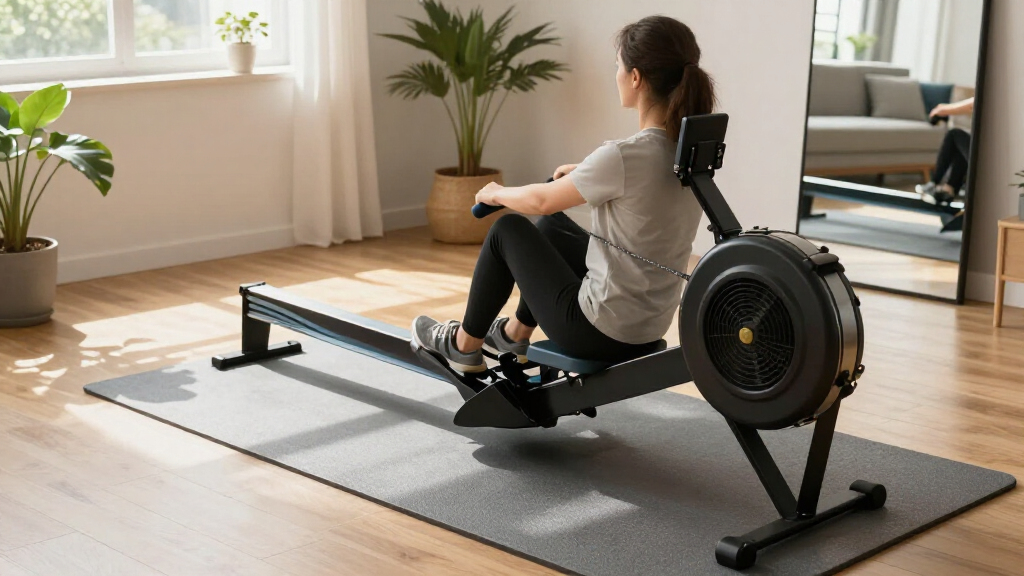
Because this roundup is specifically about compact home rowing machines, I judged every model first on its footprint and storage story — folded dimensions matter as much as unfolded ones, and a rower that stands upright or rolls away earns real credit over one that merely lies flat. From there, I weighted resistance type and quality heavily: magnetic systems with 16 levels offered the smooth, quiet pull that makes apartment workouts viable, while hydraulic pistons were scored down for stroke choppiness and long-term durability concerns. Noise, build quality, weight capacity, and warranty coverage rounded out the hardware assessment.
On the value side, I compared each machine’s price against what it actually delivers — a $170 hydraulic rower with coaching apps and a $170 one with a bare LCD monitor are not equal purchases. This is why the rankings lean magnetic: across all 14 machines, the pattern was consistent that magnetic rowers justify their higher price with better feel and longevity, while hydraulic models only win when budget is the single deciding factor. Duplicate products were consolidated by price, and connectivity features were credited only when they added real workout guidance rather than a novelty app.
Factors to Consider When Choosing Compact Home Rowing Machines
Beyond the specific models above, choosing a compact rower well means understanding what you’re actually trading away when you shrink the machine — and where buyers most often regret their purchase.Resistance Type: The Decision That Shapes Everything
Magnetic and hydraulic resistance are the two systems you’ll find in this price class, and they produce genuinely different workouts. Magnetic resistance uses adjustable magnets against a flywheel, giving a smooth, consistent pull at every stroke length and producing almost no noise — the reason it dominates my top rankings. Hydraulic pistons are cheaper and allow smaller frames, but the pull feels stickier at the start of each stroke, pistons generate heat during long sessions, and seals wear out over years of use. A common mistake is buying hydraulic purely on price, then abandoning the machine because the stroke feels unnatural. If you can stretch $100–150 more, magnetic pays that back in workout quality and machine lifespan. Water and air resistance, while excellent, simply don’t appear in true compact designs because their flywheels demand too much space.
Folded Size vs. Unfolded Size — Read Both Numbers
Manufacturers love quoting the ‘compact’ folded footprint while burying the unfolded rail length, and that’s where small-apartment buyers get burned. A rowing machine needs its full rail extended during use — typically seven to eight feet for magnetic models — so measure your workout space separately from your storage space. Vertical storage is the real space-saver here: models that stand upright and roll on transport wheels can live in a closet, while ones that only fold in half still eat floor width. Also check the folded weight, because a 60-pound machine you must lift to store becomes a workout before your workout. The best compact designs in this lineup fold and roll and stand — anything less than two of those three features is a compromise worth questioning.
Weight Capacity and Rail Length as Fit Indicators
Weight capacity is really a proxy for overall build quality — a 350-pound rating usually means a sturdier frame, heavier rail, and better seat bearings than a 265-pound rating on a similar-looking machine. Taller buyers should check inseam compatibility separately, because a compact frame often means a shortened slide rail; anyone over about 6’2″ risks compressing their stroke at full extension, which undermines the exercise. This is one place where compactness works directly against you, and no spec sheet advertises it clearly, so read Q&As and reviews for height reports. If two machines are close in price, the higher capacity and longer rail almost always indicate the more durable buy. Budget machines that skip published height limits usually have a reason for the omission.
Noise: Where Your Living Situation Should Decide
If you row in a shared apartment, near a sleeping child, or while watching television at low volume, noise becomes a top-two criterion rather than a nice-to-have. Magnetic rowers are near-silent apart from the seat rolling and a soft chain or strap sound — the Merach Q1S earned its high ranking partly on this point. Hydraulic rowers add a hissing or squelching piston sound that intensifies with resistance level, which some find tolerable and others find infuriating within a week. Before buying, honestly assess your noise tolerance and your household’s, because this is the tradeoff most likely to make an otherwise fine machine unusable. Rowing at 5 a.m. in a studio apartment is a magnetic-only activity in my view.
Connectivity and Coaching: Real Value or Gimmick?
App connectivity splits into two tiers, and only one of them justifies paying more. Structured coaching courses — like those bundled with the Merach models — guide workout intensity in real time, which genuinely helps beginners who otherwise row at one flat effort level and plateau. The lower tier is a Bluetooth monitor that just mirrors your stats on a phone screen; that’s a convenience, not a feature worth a price premium. A common mistake is paying extra for app-connected machines without checking whether the app requires a subscription after a trial period, which quietly raises the total cost. If you’re self-motivated and follow free rowing videos online, a basic LCD monitor is all you need. Beginners and accountability-driven users benefit most from real guided programming.
Total Cost of Ownership Beyond the Sticker Price
The cheapest rower is rarely the cheapest rower to own. Hydraulic machines may need piston replacements within a few years of regular use, and off-brand models without parts support effectively become disposable when a single component fails. Magnetic machines cost more upfront but their resistance system has essentially no wearing contact surface, which is why I treated the extra spend as an investment rather than an upsell in the rankings. Check warranty length as a durability signal — five years on a frame versus one year tells you how much the manufacturer trusts its own product. Factor in delivery, assembly difficulty, and whether the brand has a US support presence at all. A $330 magnetic rower that lasts a decade beats three $150 hydraulic machines replaced in rotation.
Frequently Asked Questions
Can a compact rowing machine give a real workout, or am I compromising too much?
The compactness itself costs you very little — resistance intensity on machines like the Merach RS3 or YOSUDA 16-level models is fully adjustable and easily challenging enough for fit users. What you actually trade away is stroke smoothness on hydraulic models and sometimes rail length, which matters if you’re tall. Magnetic compact rowers deliver roughly 85–90% of the experience of a full-size gym erg, which is why they dominate the top of my rankings. The compromise only becomes real if you’re training seriously for on-water rowing, where a full-length Concept-style machine still makes sense. For general cardio and strength conditioning, a good compact rower is not a downgrade worth worrying about.
Is hydraulic resistance bad, or just cheaper?
Hydraulic resistance isn’t bad — it’s a different tool with honest limitations. It’s cheap, compact, and the adjustable pistons on models like the Feierdun or Sunny 12-level rowers do provide a legitimate workout for light-to-moderate use. The problems are the stickier stroke feel at the catch, heat buildup during sessions past 20–30 minutes, and piston seals that degrade over years, gradually weakening resistance. If you plan to row several times a week indefinitely, magnetic is the smarter buy despite costing more. If you’re sampling rowing on a tight budget or want a machine for occasional rainy-day cardio, hydraulic is a perfectly defensible choice — it’s the long-term daily driver role where it disappoints.
How much floor space do I actually need for one of these machines?
Plan for two measurements, not one. In use, most magnetic rowers in this roundup need roughly 7–8 feet of rail length plus arm span clearance at each end, so a clear 8-by-4-foot zone is a safe working area even for ‘compact’ models. For storage, folding magnetic machines stand vertically in roughly 2 square feet, while hydraulic models are often short enough to slide under a bed or into a closet as-is. Measure your space at both extremes before ordering — buyers regularly forget that the machine must be fully extended while in use, not just while stored. Also leave room to walk around the machine safely, since stepping over an extended rail mid-workout is how household injuries happen with home rowers.
Why do the same rowers appear twice in my search results, and does it matter which listing I buy?
Duplicate listings are extremely common in this category — both the YOSUDA 16-level magnetic rower and the Sunny 12-level hydraulic rower appear under multiple listings with identical hardware. It matters for two reasons: price and fulfillment. Identical machines frequently differ by $30–80 between listings depending on the seller, bundled accessories, or shipping terms, so always price-check every variant before buying. Second, the seller determines your warranty and returns experience, so a slightly pricier listing shipped by the brand itself can be safer than the cheapest third-party option with no support. Check whether included accessories (bands, monitor features, app trials) actually differ between the duplicates, because sometimes they genuinely do. Ten minutes of comparison routinely saves enough to cover a replacement seat pad or mat.
Are app-connected rowers worth the extra money for a beginner?
For most beginners, yes — but only for the right kind of connectivity. Guided coaching programs, like the structured courses bundled with the Merach RS3 and foldable Merach model, solve the single biggest beginner problem: pacing. New rowers almost always row at one flat, moderate effort and stop seeing progress within a month, while guided intervals force variation and measurable improvement. What’s not worth paying for is a basic Bluetooth monitor that just mirrors your stats on a phone — that adds convenience, not training value. Check whether the app requires a subscription after a free trial, since recurring fees can double the machine’s cost over two years. If you’re disciplined enough to follow free rowing videos and track your own progress, skip the premium and put the savings toward a better resistance system.
Conclusion
After comparing all 14 machines, the right choice comes down to who’s rowing. For the best overall pick, the Merach Q1S wins on the combination of a smooth dual-rail glide, near-silent magnetic resistance, and apartment-friendly design — it’s the machine most likely to still be in use a year from now. The best value goes to the Merach foldable magnetic rower, which matches the YOSUDA machines on resistance quality while adding genuine vertical storage and coaching courses at a competitive price; the Sunny Smart Magnetic Rower is the alternative if you prefer Sunny’s ecosystem. For beginners, the Merach RS3 makes the most sense because its app-guided workouts solve the pacing problem that derails most new rowers. On a strict budget, the Sunny Compact Hydraulic Rower or Feierdun delivers light cardio cheaply — just go in knowing the stroke feel and longevity compromises. Taller or heavier users should gravitate toward the 350 LB-capacity folding rower or the Merach models, since rail length and frame strength favor them. Whatever you choose, the pattern from this comparison is clear: spend for magnetic resistance when you can, and let your storage situation — not the spec sheet — make the final call.
Evergreen bestsellers Picks
bestsellers
As an affiliate, we earn on qualifying purchases.