
TL;DR
VO2 Max measures how much oxygen your body uses during intense exercise. A higher value generally indicates better endurance and cardiovascular health, but it’s just one piece of the fitness puzzle. Wearables now estimate VO2 Max, making it easier to track progress over time.
Ever wonder what your VO2 Max really says about your fitness? It’s often called the gold standard for aerobic capacity, but what does it actually reveal? If you’re into running, cycling, or just want to gauge your heart health, understanding VO2 Max can be surprisingly revealing.
In this guide, you’ll learn what VO2 Max measures, how it relates to your fitness, and what recent tech advancements mean for everyday athletes like you. Knowing this number can help you make smarter choices and track your progress without hype or jargon.
VO2 Max measures your body’s ability to use oxygen during intense exercise, reflecting endurance capacity.
While genetics influence VO2 Max, consistent cardio, especially HIIT, can significantly improve it.
Wearable tech estimates VO2 Max, making it easier to monitor progress without lab tests.
Higher VO2 Max links to better heart health and longer life, but it’s only one part of overall wellness.
Aging reduces VO2 Max, but regular aerobic activity can slow that decline and preserve your stamina.
What VO2 Max Really Tells You About Your Fitness
VO2 Max measures how much oxygen your body can use during intense exercise. A higher score usually points to stronger endurance and cardiovascular capacity, but it is one signal inside a bigger fitness picture.
It is less about one perfect number and more about the direction your fitness is moving.
What the number actually reveals
VO2 Max reflects how well your lungs bring oxygen in, your heart moves it through the blood, and your muscles use it when intensity rises.
Your endurance ceiling
A higher VO2 Max usually means you can sustain harder efforts before fatigue forces you to slow down.
Cardio resilience
Higher values are associated with better heart and lung health and lower long-term cardiovascular risk.
Training feedback
Changes over weeks and months can show whether your aerobic plan is building real fitness.
How oxygen becomes performance
VO2 Max is a connected system, not a magic score. Improvement comes from the chain working more efficiently under pressure.
Lungs load oxygen
Air exchange supplies oxygen for the work ahead.
Heart delivers it
Stroke volume and blood flow move oxygen to working tissue.
Muscles use it
Mitochondria convert oxygen into usable aerobic energy.
Effort lasts longer
You hold pace, recover faster, and resist fatigue.
Age benchmarks: useful, not absolute
Compare your score with context. Genetics, training history, sex, health status, and sport background all influence what “good” means for you.
| Age Group | Average VO2 Max | Good Range | Interpretation |
|---|---|---|---|
| 20-29 | 45-55 | 50+ | ✓ Strong endurance base |
| 30-39 | 43-52 | 48+ | ✓ Above-average aerobic fitness |
| 40-49 | 40-50 | 45+ | ~ Training history matters |
| 50-59 | 37-45 | 42+ | ~ Activity can slow decline |
What moves VO2 Max up or down
Your baseline may be partly inherited, but your habits decide how much of that potential you actually access.
Training effect snapshot
Consistent aerobic work improves stroke volume, oxygen delivery, and mitochondrial density. The biggest wins usually come from repeatable training, not occasional heroic workouts.
Lab test or wearable estimate?
Laboratory testing remains the gold standard, but watches and trackers make VO2 Max more practical for everyday athletes.
Lab testing
Uses graded exercise and metabolic equipment to directly measure oxygen consumption. Best for precision, performance testing, and clinical context.
Wearable estimates
Uses heart rate, pace, movement, and algorithms. Best for seeing trends, checking training response, and staying motivated over time.
The fitness puzzle is bigger than VO2 Max
A strong aerobic engine matters, but complete fitness also includes strength, mobility, recovery, consistency, and how you feel day to day.
Fast answers to common questions
Use VO2 Max as a compass for aerobic fitness, then pair it with practical signals like energy, recovery, pace, strength, and consistency.
Are wearables accurate?
They are useful for trends, but less precise than a lab test. Focus on direction over exact digits.
Can I improve it?
Yes. Regular aerobic training, especially well-recovered interval work, can noticeably raise VO2 Max.
Does it decline with age?
Usually, yes. Regular cardio can slow the decline and preserve stamina longer.
Is it the only fitness metric?
No. Strength, flexibility, mental health, sleep, nutrition, and injury resilience all matter too.
What exactly is VO2 Max, and why should you care?
VO2 Max is the maximum amount of oxygen your body can utilize during intense activity—think of it as how efficiently your lungs, heart, and muscles work together when you push yourself. It’s measured in milliliters of oxygen per kilogram of body weight per minute (ml/kg/min). For example, a VO2 Max of 45 means your body uses 45 ml of oxygen per kilo each minute during max effort.
This number isn’t just academic; it provides a concrete measure of your aerobic capacity, which directly influences your endurance and recovery. A higher VO2 Max means your body can deliver oxygen more effectively to your muscles, enabling you to sustain higher intensities longer. This can translate into faster race times, quicker recovery after exertion, and a lower risk of cardiovascular issues. Conversely, a lower VO2 Max can indicate limited aerobic capacity, which may lead to quicker fatigue and increased recovery times. Therefore, understanding and improving this metric can be a game-changer for athletes and health-conscious individuals alike.

Smart Watch for Women, Built-in Alexa, GPS, HRV, VO2 Max, Blood Oxygen, Sleep & Stress Monitor, BT Calling, Compass, Altimeter, 1.32" AMOLED, Fitness & Women’s Health, Waterproof, iPhone Compatible
- Health Monitoring: HRV, VO2 Max, SpO2, Sleep, Stress
- Outdoor Navigation: GPS, Compass, Altimeter
- Voice & Calls: Alexa, Bluetooth Calling, Notifications
As an affiliate, we earn on qualifying purchases.
As an affiliate, we earn on qualifying purchases.
How does your VO2 Max compare to others — and what’s considered good?
| Age Group | Average VO2 Max | Good Range |
|---|---|---|
| 20-29 | 45-55 | 50+ |
| 30-39 | 43-52 | 48+ |
| 40-49 | 40-50 | 45+ |
| 50-59 | 37-45 | 42+ |
Understanding where you stand relative to these benchmarks can be motivating, but it’s also important to interpret what these numbers mean for your health and performance. For instance, a VO2 Max above the average for your age group typically indicates good cardiovascular health and a higher capacity for endurance activities. However, these are general guidelines; individual factors like genetics, training history, and overall health can influence what’s optimal for you. Recognizing your position within these ranges helps in setting realistic, personalized goals. If your VO2 Max is below average, it might suggest a need to incorporate more aerobic activity into your routine, but it also highlights the potential for improvement through targeted training. Conversely, a high VO2 Max can be a sign of excellent conditioning, but it’s not the sole indicator of overall health or athletic success. Balancing this metric with other aspects of wellness ensures a comprehensive approach to your fitness journey.
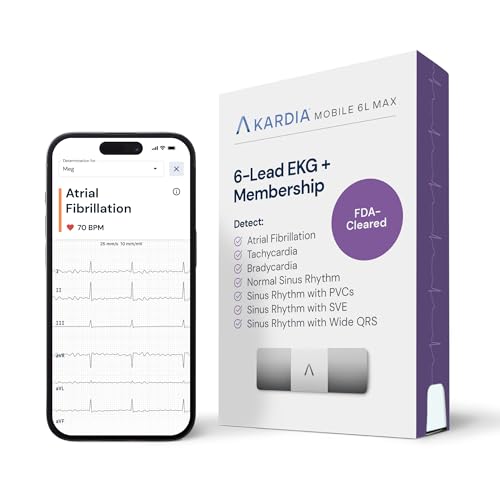
KardiaMobile 6L Max EKG Monitor, Includes One-Year KardiaCare Membership, FDA-Cleared Heart Monitor, Medical-Grade Results in 30 Seconds, Unlimited Recordings, Works with Smartphones and Tablets
- Accurate 6-Lead EKG: Medical-grade results in 30 seconds
- Detects Common Arrhythmias: AFib, Bradycardia, Tachycardia, and more
- Includes One-Year KardiaCare: Unlimited recordings and membership benefits
As an affiliate, we earn on qualifying purchases.
As an affiliate, we earn on qualifying purchases.
What influences your VO2 Max — and what you can do about it
Your VO2 Max is shaped by the interplay of genetics, training, and lifestyle choices. Genetics provide a baseline—some individuals are naturally predisposed to higher capacities due to factors like lung size, heart efficiency, or muscle fiber composition. However, these innate traits are only part of the story. Your daily activities, training consistency, and overall health significantly influence how high your VO2 Max can go.
Engaging in regular aerobic exercise, especially high-intensity interval training (HIIT), can lead to meaningful improvements by increasing your heart’s stroke volume, mitochondrial density, and overall cardiovascular efficiency. For example, studies show that consistent HIIT can boost VO2 Max by 10-20% within a few months, which can dramatically enhance your endurance and recovery. On the flip side, a sedentary lifestyle or inconsistent activity can cause your VO2 Max to decline—roughly 1% annually after age 25—highlighting the importance of staying active. Lifestyle factors such as nutrition, sleep quality, and stress management also play critical roles in supporting your training gains and recovery, ultimately impacting your VO2 Max. Recognizing these influences allows you to craft a balanced, sustainable training plan that maximizes your genetic potential while addressing lifestyle factors, helping you avoid overtraining, injury, or burnout.

KardiaMobile 1-Lead EKG Monitor, Medical-Grade FDA-Cleared Personal Heart Monitor, Detects Normal, AFib & Arrhythmias, 30 Second Results, Works with Most Smartphones, HSA&FSA Eligible
- Portable EKG Device: Capture 12-lead ECG in 30 seconds
- Easy-to-Read Results: Detects AFib, arrhythmias, normal rhythm
- Shareable EKG Data: Email results to your doctor or others
As an affiliate, we earn on qualifying purchases.
As an affiliate, we earn on qualifying purchases.
Can you track VO2 Max without a lab? Yes — and here’s how.
While the most accurate way to measure VO2 Max involves laboratory testing with specialized equipment, modern technology has made it accessible through wearable devices. These devices estimate VO2 Max by analyzing your heart rate, pace, and movement during activities like running or cycling. They use advanced algorithms based on extensive datasets to produce a reasonable approximation of your aerobic capacity.
For example, during an outdoor run, your smartwatch tracks your pace, heart rate, and cadence. Over weeks or months, it observes trends—such as increases in estimated VO2 Max—that serve as indicators of your aerobic improvements. These trend-based insights can be highly motivating, helping you adjust your training intensity or volume to optimize gains. While these estimates are less precise than lab tests, they’re valuable for monitoring progress over time and making informed decisions about your training. It’s important to interpret these numbers as part of a broader picture—focusing on consistent improvements rather than obsessing over exact figures. This approach encourages sustainable progress and helps you stay motivated on your fitness journey, even without access to a lab setting.

Digital Breathing Dumbbells Raining Device with Adjustable air holes(Pink)
- Digital Display: HD digital display records breathing rate
- Adjustable Air Holes: Customize pore size for breathing frequency
- Eco-Friendly Materials: Made of safe, odorless PCTG+PMMA
As an affiliate, we earn on qualifying purchases.
As an affiliate, we earn on qualifying purchases.
Frequently Asked Questions
How accurate are wearable devices at estimating VO2 Max?
Wearables provide convenient estimates based on heart rate and activity data. While they’re useful for tracking trends, they’re not as precise as laboratory tests. Expect some margin of error, but overall, they help you see if your aerobic fitness is improving over time.
Can I improve my VO2 Max with regular exercise?
Yes. Consistent aerobic workouts, especially high-intensity interval training, can boost your VO2 Max noticeably over weeks or months. The key is regularity and pushing your limits safely.
What’s considered a good VO2 Max for my age?
Good values depend on age and sex, but generally, a VO2 Max above 50 ml/kg/min is excellent for many adults. For example, a 40-year-old man with a VO2 Max of 52 is performing well, while a woman with 45 is doing great for her age.
Does VO2 Max decline with age?
Yes, typically by about 1% annually after 25-30. However, regular aerobic activity can slow this decline, helping you stay active and resilient longer.
Is VO2 Max the only measure of fitness I should care about?
No. It mainly measures aerobic capacity. Strength, flexibility, mental health, and other factors also matter for overall wellness. Use VO2 Max as one of multiple tools to gauge your progress.
Conclusion
Your VO2 Max offers a clear snapshot of how well your heart and lungs support your activity levels. It’s a powerful motivator and benchmark, but remember: it’s just one piece of your fitness story. Keep moving, challenge yourself, and watch your capacity grow — one step at a time.
Imagine your body as a finely tuned engine — the better it runs, the farther you can go, whether that’s a 5K or a walk in the park. Your VO2 Max isn’t just a number; it’s a reflection of your resilience. So, what will you do today to improve it?