
TL;DR
Play games included with Prime
Start a Prime free trial and play with Amazon Luna on your devices.
Start playingAs an affiliate, we earn on qualifying purchases.
Active calories are the energy burned during movement beyond resting, while total calories include everything your body uses daily. Fitness trackers estimate both, but accuracy varies. Knowing the difference helps you manage your habits better, without obsessing over numbers.
Ever look at your fitness tracker and wonder: are those active calories really telling me how much I burned? Or are they just a rough guess? The truth is, understanding the difference between active and total calories can change how you interpret your health data. It’s not about obsessing over every number—it’s about knowing what they mean and how to use them to support your goals.
This guide cuts through the hype and explains what these terms really mean, how devices estimate them, and why it matters. Whether you’re aiming for weight management, better movement, or just curious, getting clear on this can help you make smarter decisions every day.
Your resting metabolic rate makes up about 60-75% of your daily calorie burn, so focusing only on active calories misses the bigger picture.
Fitness trackers estimate active calories using sensors, but their accuracy can vary by 10-20%. Use them as guides, not gospel.
Increasing daily movement and creating a consistent calorie deficit matter more than obsessing over active calorie counts.
Total calories include everything—resting, digestion, and activity—so understanding your overall energy balance is key for weight management.
Use device data to motivate, but don’t rely solely on numbers. Focus on sustainable habits over time.
What Are Active and Total Calories, and Why Do They Matter?
Active calories are the energy you burn during intentional movement—like walking, cycling, or lifting weights. Total calories include everything your body uses in a day—resting metabolic rate (RMR), digestion, and all movement. Think of total calories as your daily energy budget, while active calories are the extra spending from your workouts and steps.
For example, if you burn 1,800 calories a day, about 1,350 come from your resting processes, and the remaining 450 come from activity. Knowing this helps you see how your daily habits add up. It’s especially useful when tracking activity for weight goals or understanding why your energy levels fluctuate.
Understanding this distinction is crucial because it influences how you interpret your calorie data. For instance, if you see a high active calorie count, it might seem like you’re burning a lot of energy, but if your total is still high, your overall intake might negate those efforts. Conversely, focusing solely on active calories might lead you to overestimate the impact of your workouts without considering the baseline energy your body needs to function.
fitness tracker with heart rate monitor
As an affiliate, we earn on qualifying purchases.
As an affiliate, we earn on qualifying purchases.
How Do Fitness Devices Measure Active Calories? And How Accurate Are They?
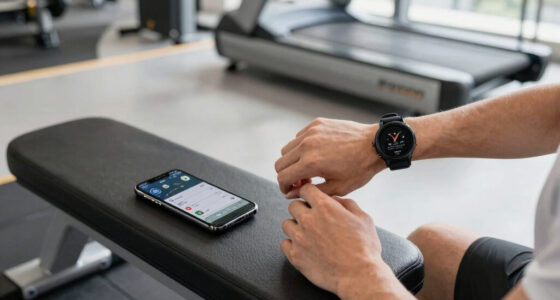
Fitness trackers estimate active calories using sensors like accelerometers and heart rate monitors. They analyze movement patterns and heart rate data to guess how many calories you burn. For example, a wristwatch might say you burned 300 calories during a 30-minute jog.
But the accuracy of these estimates hinges on the quality of the sensors and the algorithms they use. When sensors detect movement, they attempt to translate that data into calorie expenditure, but this process involves assumptions that can introduce errors. For example, if your device misreads your heart rate or movement intensity—perhaps because it’s too loose or because of irregular activity—the calorie estimate can be skewed.
Recent advancements, like multi-sensor data and AI-driven algorithms, have improved estimates, but they still cannot fully account for individual differences—such as body composition, fitness level, or activity type. This means that while your device can motivate you and provide useful trends, relying solely on its calorie count for precise tracking can be misleading. Recognizing these limitations helps you use the data more effectively, focusing on overall activity patterns rather than exact numbers.
As an affiliate, we earn on qualifying purchases.
Why Does Accuracy Vary So Much, and Should You Worry?
Device accuracy depends on sensors and algorithms, which can be thrown off by factors like inaccurate heart rate readings or irregular movement. For example, pushing a stroller or carrying groceries can inflate or deflate your active calorie count.
Understanding why these fluctuations happen is key to interpreting your data wisely. Factors such as how tightly you wear your device, variations in movement intensity, and even environmental conditions can cause discrepancies. Recognizing these sources of error helps you avoid overreacting to daily fluctuations or assuming your device is faulty.
Research shows that during high-intensity activities, devices tend to overestimate calories burned because they interpret vigorous movements as more intense than they actually are. Conversely, during low-intensity or sedentary periods, they often underestimate because subtle movements or non-arm activities aren’t captured well. Instead of obsessing over the precise number, focus on consistent activity levels and use the data as a motivational tool. The goal is to maintain a steady, sustainable level of activity over time, rather than fixate on exact calorie counts each day.
activity tracker for accurate calorie burn
As an affiliate, we earn on qualifying purchases.
As an affiliate, we earn on qualifying purchases.
Frequently Asked Questions
Can I lose weight just by increasing my active calories?
Not exactly. While increasing activity helps burn calories, weight loss depends on maintaining a consistent calorie deficit over time. You need to balance activity with mindful eating for lasting results.
Are fitness trackers accurate enough to rely on for health decisions?
They provide useful motivational data, but their estimates can be off by 10-20%. Use them as a helpful guide, not an exact measurement, and focus on overall habits.
Should I worry if my active calorie count varies day to day?
Natural fluctuations happen due to activity levels, device accuracy, and even how you wear your device. Instead of stressing over daily numbers, aim for consistency over weeks and months, recognizing that small variations are normal and expected.
How can I improve my calorie estimates at home?
Combine device data with mindful tracking of your activities and food intake. Focus on establishing regular movement habits and understanding your body’s responses, rather than obsessing over precise calorie counts, which are inherently estimative.
wearable device for resting metabolic rate
As an affiliate, we earn on qualifying purchases.
As an affiliate, we earn on qualifying purchases.
Conclusion
Knowing the difference between active and total calories helps you see your fitness data with clearer eyes. It’s about understanding that calorie counts are estimates—use them to guide your habits, not judge your progress.
Focus on steady movement, mindful eating, and patience. Your body’s energy system is complex, but small, consistent steps keep you moving forward. After all, your health isn’t a number—it’s a journey.
Fall yard work Picks
leaf blowers
As an affiliate, we earn on qualifying purchases.